REVIVE
Process
Double Diamond Methodology
To structure the process, I used the Double Diamond model, which allowed me to conduct in-depth research, define a clear challenge, devise a user-centered solution, and deliver a functional prototype validated with real users.
1
Discover:
Secondary research and semi-structured interviews with people with intellectual disabilities, inclusion experts, recruiters, and foundation managers. This allowed us to identify barriers such as the lack of adapted training, non-inclusive selection processes, and the need for constant support in the workplace.
2
Define:
With the information obtained, I organized the findings using tools such as the Eisenhower Matrix, User Personas, and Service Blueprint. I identified five key insights that gave rise to design challenges (How Might We). The focus shifted from finding employment to maintaining it independently, and the concept of an accessible job support app emerged.


People with intellectual disabilities need support and clear, structured information, especially in the early stages of the inclusion process, because without it they cannot feel comfortable performing their tasks, understanding mistakes, and feeling secure in their position from the outset.
3
Develop:
Through ideation workshops, possible solutions were co-created with UX students. A proposal focused on cognitive accessibility and constant support was chosen. Wireframes, information architecture, and high-fidelity prototypes were designed, prioritizing simple language, visual navigation, and accessibility.


TASKS
DETAIL
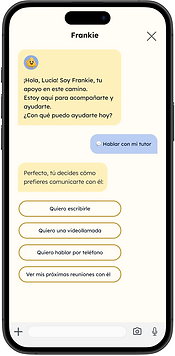
CHATBOT

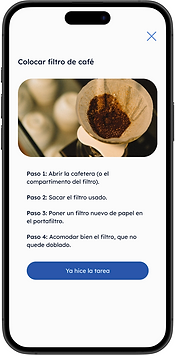
If users do not understand a task, they can view step-by-step details in easy-to-read format.
Chatbot with targeted questions to resolve any user issues and, if necessary, redirects them to a personal tutor.Chatbot with targeted questions to resolve any user issues and, if necessary, redirects them to a personal tutor.

%2020_23_00.png)
Section of my company where users can find relevant information about their company. Regulations, team, payments, schedule, and workplace.


Personal tutor with weekly video calls and the possibility of scheduling appointments at times defined by the tutor.

4
Deliver::
Although the prototype has not yet been tested with end users, the design was built on solid insights derived from interviews with people with intellectual disabilities, experts in workplace inclusion, and recruiters.
Next steps are being planned to test the entire flow with real users, identify opportunities for improvement, and evaluate the feasibility of implementation in real work environments. The goal is to validate the tool's impact on autonomy, task comprehension, and job retention.